16x22x4 Air Filter for Pet Odor and Dander: A Buying Guide
Every pet-owner home I service across South Florida gives the same tell: spotless floors, yet the AC still carries a faint trace of dog the moment it kicks on. Nine times out of ten, the filter size is right, and the MERV rating is wrong. This guide tells you exactly which 16x22x4 rating stops dander and odor, why the label size isn't the real size, and how often to swap the filter if a pet lives in the house.
TL;DR
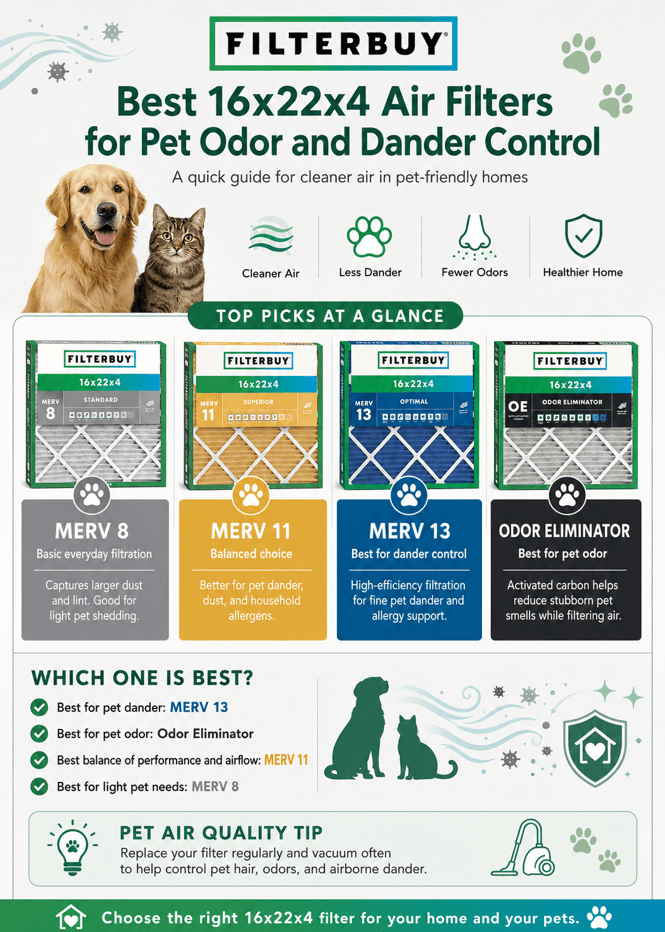
A 16x22x4 filter rated MERV 11 or MERV 13 is what actually catches pet dander and cuts down lingering odor, since higher MERV ratings trap the microscopic particles that pass right through a standard MERV 8. In a pet household, I'd plan on changing it every 60 days instead of stretching to the usual 90.
Top Takeaways
Pet dander is small enough that a MERV 8 filter lets a lot of it through, so MERV 11 or 13 is the real fix.
The actual size of a 16x22x4 filter is closer to 16 by 22 by 3.63 inches, not a true 4 inches, so measure before you order.
The deeper 4-inch pleat gives more surface area than a 1-inch filter, so it holds more debris before airflow suffers.
Pet households should change this size every 1 to 2 months, not the standard 3.
MERV rating reduces odor mostly as a side effect of removing dander; an activated carbon layer is the real fix for smell that lingers after the upgrade.
Why Pet Odor and Dander Are Tougher on a Filter Than Regular Dust
I've walked through enough homes with dogs or cats to know the air filter tells the story before I even ask. Pet dander is made of tiny flakes of skin, and it stays airborne for a long time before it settles, which is exactly why it's harder to trap than ordinary household dust. A filter that's fine for a pet-free home usually isn't doing much in a home with a shedding dog or a cat that grooms constantly. If dust and pet hair have been a recurring headache, a 20x30x2 filter breakdown for allergy relief covers the same MERV logic for a different size, worth a look if you have more than one system in the house.
Which MERV Rating Actually Stops Pet Dander and Odor
This is where most people get it wrong. A MERV 8 filter is built for basic dust and lint. It isn't really designed to catch dander-sized particles or the odor-carrying compounds that ride along with them. Step up to MERV 11, and you're catching a noticeably higher share of airborne particles, which is enough for most pet owners. If someone in the house also has allergies, MERV 13 is the one I'd point them to. It's the highest rating this size comes in, and it's the closest thing to hospital-grade filtration you can run in a standard residential system. I can usually tell within the first week of a MERV 11 swap, because the litter box smell that used to hit the second you walked in the front door stops carrying past the hallway. I go deeper on the tradeoffs in my full MERV 13 selection guide if you want the longer version.
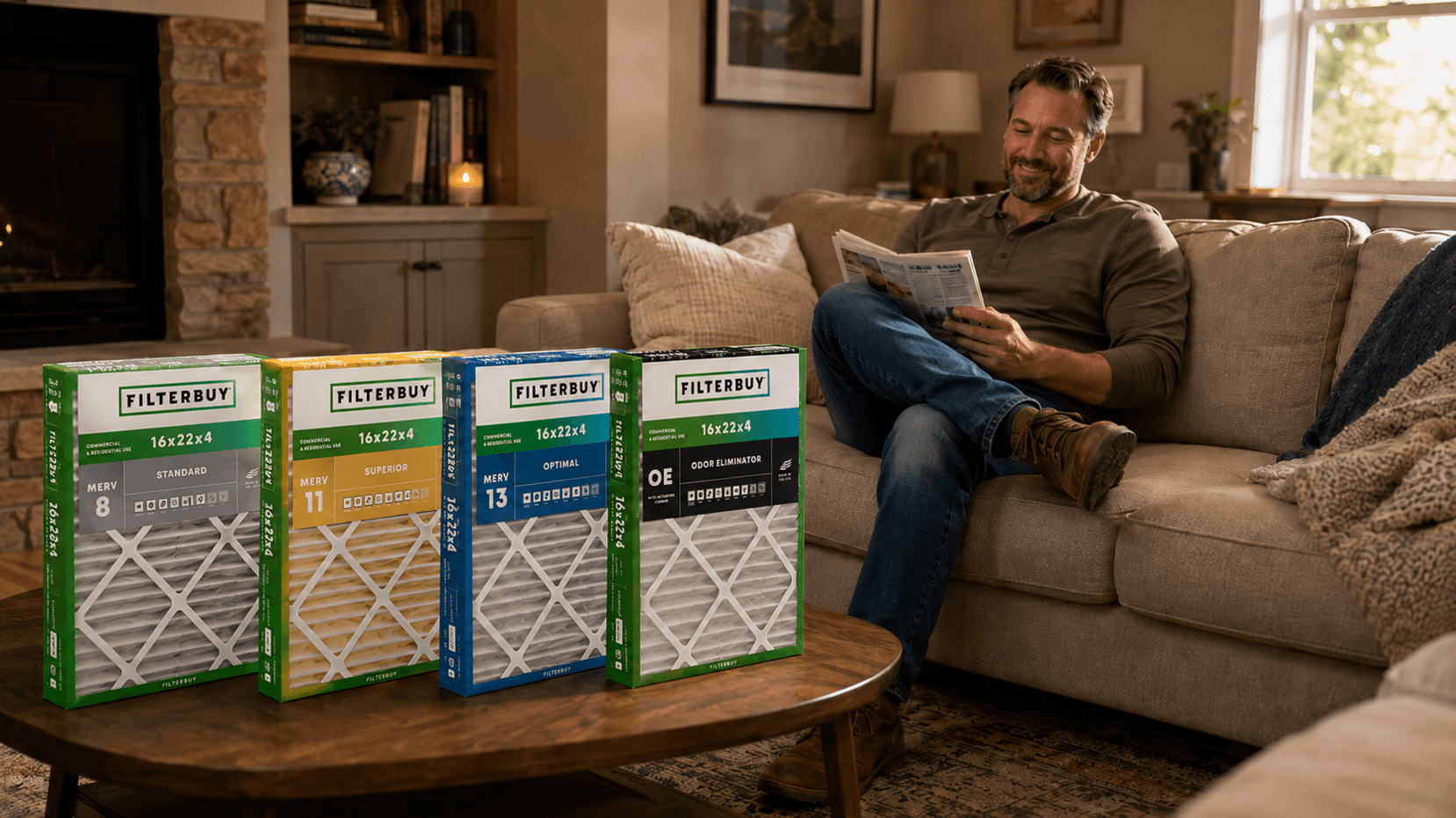
"In fifteen years of servicing HVAC systems in pet-heavy South Florida households, I've noticed the odor complaints almost always trace back to the same mistake: someone bought the right filter size but stopped at MERV 8, when the real fix was paying a few dollars more for MERV 11 or 13." - Lý Luân
Does a Higher MERV Rating Actually Remove Odor, or Just Dander?
Here's the nuance most buying guides skip. MERV only measures how well a filter captures particles; it doesn't measure odor removal directly. A MERV 11 or 13 filter cuts odor mostly as a side effect, by pulling the dander and bacteria that carry the smell out of circulation before they settle into fabric and vents. For a lingering smell that survives even after the upgrade, the missing piece is usually an activated carbon layer, which adsorbs the actual odor molecules instead of just trapping particles. My advice: treat MERV 11 or 13 as the dander and allergen fix first, and only look at carbon layer media if odor is still noticeable after a full 60-day cycle on the higher rating.
Actual Size vs. Nominal 16x22x4, Why the Fit Matters
16x22x4 is a nominal size, not the exact measurement. The real dimensions run closer to 16.00 by 22.00 by 3.63 inches, which is normal for pleated filters and won't affect fit in a system built for this size. I always tell people to pull their old filter and check the printed dimensions before ordering; it's the single most common mistake I see with filter returns. I've had more than one customer call convinced their new filter was defective because it slid in with a sliver of give around the frame, when that quarter-inch gap is exactly what the actual measurement predicts. I walked through the same nominal versus actual mix-up in more detail in this breakdown of a Goodman 20x22x5 filter if the sizing logic still feels confusing.
One Installation Mistake That Cancels Out the Upgrade
Upgrading to a higher MERV rating doesn't help if the air filter goes in backward. Every pleated 16x22x4 filter has an airflow direction arrow printed on the frame, and it needs to point toward the blower, not away from it. Install it backward, and you lose a meaningful share of the filter's rated efficiency, because the pleats aren't supported the way they're built to be, and I've traced more than a few premature filter blowouts back to exactly this. It takes five seconds to check the arrow before you slide a new one in.
How Often to Change a 16x22x4 Filter in a Pet Household
The standard advice is every 90 days. I don't follow that in a home with pets. Shedding and dander buildup clog a filter faster than normal dust does, so I recommend checking it monthly and planning to replace it every 60 days, sooner if you notice reduced airflow or a musty smell coming through the vents. I can usually tell a pet household's filter from a pet-free one without asking; the leading edge goes gray in about half the time. I break down the general replacement signals in this furnace filter change schedule guide if you want a broader reference. You can compare the full 16x22x4 air filters lineup across MERV 8, 11, and 13 here to see which rating fits your household before you buy.
The South Florida Factor Most Buying Guides Skip
Most 16x22x4 buying guides quote the same 90-day default no matter where you live, and that number was built around a system that only runs seasonally. Here in South Florida, the AC runs close to year-round, which means the blower is pulling air through that filter far more hours per month than the same size filter in a house up north. Add a pet to that equation, and the standard schedule is off twice over, once for the climate and once for the shedding. That's why I treat a 16x22x4 in a pet household here more like a 45 to 60 day filter than the 90 days printed on most packaging.
A Note From My Own Experience
I've swapped out enough dander-clogged filters in South Florida homes to say this with confidence. The jump from MERV 8 to MERV 11 is the one upgrade pet owners notice fastest, usually within the first couple of weeks. It's a small change with a bigger payoff than people expect.
Essential Resources
Understand What a MERV Rating Actually Measures
Before you commit to MERV 8, 11, or 13 in this size, this is the plain-language federal explainer on how filter efficiency is rated and which particle sizes each level captures.
Source: U.S. Environmental Protection Agency, What is a MERV rating?
See Why MERV-13 Is Now the Recommended Upgrade Tier
Federal ventilation guidance now points to MERV-13 or better whenever a system can support it, useful context for deciding whether to stop at MERV 11 or go higher.
Source: CDC, National Institute for Occupational Safety and Health, Improving Air Cleanliness
Learn How a Clean Filter Protects Your Energy Bill
A clogged filter forces your HVAC system to work harder and use more energy; this guide covers the simple maintenance habits that keep a system efficient year-round.
Source: ENERGY STAR, Heat and Cool Efficiently
Get the Full Picture on What Your Filter Is Actually Stopping
This joint federal consumer guide walks through the biological pollutants, including animal dander, that circulate through home HVAC systems, along with a full glossary of terms.
Source: U.S. Consumer Product Safety Commission, The Inside Story: A Guide to Indoor Air Quality
Check Your Symptoms Against Real Pet Allergy Data
If allergy relief is part of why you're upgrading, this resource breaks down what pet allergens actually are and how to reduce exposure beyond the filter itself.
Source: Asthma and Allergy Foundation of America, Pet Allergy
Compare Filtration Options Before You Commit
A side-by-side look at HVAC filters versus portable air cleaners, useful if you're deciding whether a higher-MERV furnace filter alone will be enough for your home.
Source: American Lung Association, Air Cleaning
Understand the Science Behind Animal Allergens
A concise medical overview of how pet allergens spread and linger in a home, helpful for setting realistic expectations about what filtration can and can't fix on its own.
Source: National Library of Medicine (NIH), Overview: Allergies to Animals
3 Numbers That Show Why Filtration Matters
Pet dander is a recognized indoor air pollutant. The EPA classifies animal dander as a biological pollutant that circulates through home HVAC systems and can affect indoor air quality year-round. (Source: EPA, Biological Contaminants and Indoor Air Quality)
Pet allergies affect a meaningful share of allergy sufferers. Allergies to cats and dogs affect 10 to 20 percent of the world's population, according to the Asthma and Allergy Foundation of America. (Source: AAFA, Pet Allergy)
A dirty filter wastes energy, not just air quality. ENERGY STAR notes that heating and cooling make up nearly half of a typical home's energy use, and recommends checking the filter monthly and replacing it at least every three months. (Source: ENERGY STAR, Heat and Cool Efficiently)
Glossary
MERV (Minimum Efficiency Reporting Value): a 1 to 20 scale rating of how well an air filter captures particles of different sizes; higher numbers mean finer filtration.
Pleated filter: a filter with folded, accordion-style media that increases surface area compared to a flat filter of the same footprint.
Nominal vs. actual size: the nominal size, such as 16x22x4, is the labeled, rounded dimension; the actual size is slightly smaller to allow a proper fit in the housing.
Dander: microscopic flakes of skin shed by animals, classified as a biological indoor air pollutant.
Activated carbon media: a filter layer that adsorbs odor-causing gas molecules, distinct from the pleated media that captures particles.
Airflow direction arrow: the printed marking on a filter frame showing which side faces the blower; installing it backward reduces the filter's rated performance.
Final Thoughts
If you've got a dog or cat in the house and you're still running a basic MERV 8 in a 16x22x4 slot, that's the easiest upgrade on your list. My honest opinion after years of doing this: MERV 11 is the sweet spot for most pet owners, and MERV 13 is only worth the extra pull if allergies are already a problem in the house, not just because a higher number sounds better. Moving up a tier and tightening your change schedule solves the dander problem and the odor problem at the same time, no extra equipment needed.
Frequently Asked Questions
Does a 4-inch filter really work better than a 1-inch filter for pet dander?
Yes. The deeper pleat gives more surface area to trap particles, so it holds more dander before airflow drops off, and it typically lasts longer between changes than a 1-inch filter.
Can I use MERV 13 in any HVAC system?
Most residential systems handle MERV 13 fine, but very old or restrictive systems can struggle with the added airflow resistance. If you're not sure, check your system's manual or ask an HVAC tech before switching.
Will a higher MERV rating stop pet odor completely?
It significantly reduces it by trapping the particles that carry odor, but it won't eliminate smells from litter boxes or accidents. In every home I've serviced, that part still comes down to source cleaning, not the filter.
Does it matter which way the filter faces when I install it?
Yes. Line up the airflow arrow printed on the frame so it points toward the blower. A filter installed backward loses a meaningful share of its rated efficiency no matter how high the MERV number is.
Ready to Upgrade?
Take a look at the MERV 8, 11, and 13 options in this exact size and pick the rating that matches your household. Browse the full 16x22x4 lineup now!
Glossary
MERV (Minimum Efficiency Reporting Value): a 1 to 20 scale rating of how well an air filter captures particles of different sizes; higher numbers mean finer filtration.
Pleated filter: a filter with folded, accordion-style media that increases surface area compared to a flat filter of the same footprint.
Nominal vs. actual size: the nominal size, such as 16x22x4, is the labeled, rounded dimension; the actual size is slightly smaller to allow a proper fit in the housing.
Dander: microscopic flakes of skin shed by animals, classified as a biological indoor air pollutant.
Activated carbon media: a filter layer that adsorbs odor-causing gas molecules, distinct from the pleated media that captures particles.
Airflow direction arrow: the printed marking on a filter frame showing which side faces the blower; installing it backward reduces the filter's rated performance.
Learn more about HVAC Care from one of our HVAC solutions branches…
Filterbuy HVAC Solutions - West Palm Beach FL
1655 Palm Beach Lakes Blvd., Ste 1005 West Palm Beach, FL 33401
(561) 448-3760
https://maps.app.goo.gl/VarpgNZnxuPQuW8A7
